ISO 17025 and accredited calibration: what it really means in the context of electromagnetic fields
In the field of electromagnetic field measurements, discussing calibration without referring to the ISO/IEC 17025 effectively means ignoring the main reference that defines the metrological quality of the data.
The ISO 17025 standard is not a generic quality certification, but an international standard that certifies the technical competence of testing and calibration laboratories. Its value does not lie in the formality of the certificate, but in its ability to ensure that every measurement is traceable and repeatable.
In the case of EMF instruments, this aspect becomes even more critical. Measuring electromagnetic fields involves complex variables, and without accredited calibration, the data produced by the instrument loses reliability and, in more critical contexts, even validity.

What distinguishes an ISO 17025 calibration
An accredited calibration according to ISO 17025 is based on a precise principle: the comparison between the instrument under test and reference standards whose traceability chain is internationally recognized.
This implies that every result reported in the certificate is not simply a measurement, but data accompanied by:
- declared measurement uncertainty
- defined operating conditions
- traceability to recognized metrological standards
In the EMF context, this translates into verifying the instrument’s response across specific frequency bands and field levels, using procedures that take into account real operating conditions.
This is where the substantial difference between an operational check and an accredited calibration becomes clear: the former may confirm that an instrument “works,” while the latter demonstrates how accurately it measures.
Accredited calibration and applications in electromagnetic fields
Applications requiring EMF measurements are often associated with regulatory requirements, exposure assessments, or inspection activities. In these areas, data quality is non-negotiable.
An ISO 17025 calibration therefore becomes necessary when:
- data must be submitted to regulatory authorities
- compliance with regulatory limits is required
- measurements are part of audit or certification processes
In the absence of these requirements, it is still common practice to maintain internal control of instruments, but it is essential not to confuse this level with accredited calibration.
The role of technical calibration management
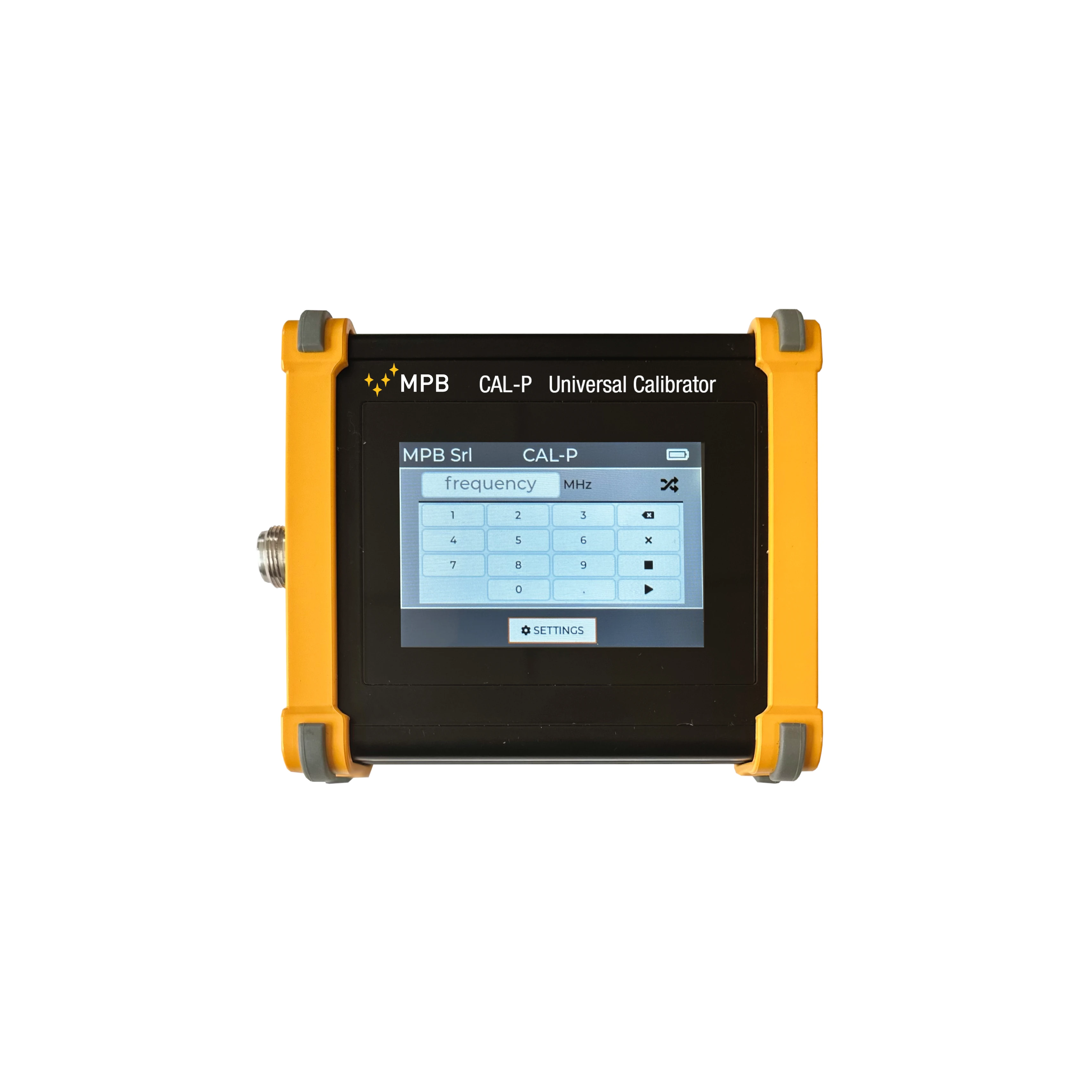
An often overlooked aspect concerns the operational management of calibration. The quality of the result also depends on what happens before and after calibration: verification of the instrument’s condition, inspection of sensors and accessories, and consistency between configuration and test conditions. MPB operates in this area as a technical coordination structure, integrating verification activities, functional testing, and process management with ISO 17025 accredited laboratories. This approach ensures operational continuity of instruments while guaranteeing certifications with full metrological validity. In particular, the use of dedicated systems for preliminary testing of EMF probes and sensors makes it possible to detect anomalies before sending equipment to the laboratory, reducing time and potential issues.
_1783495885.png "portable system for functional testing of probes, antennas, and personal protection devices for EMF applications")
Conclusion
Understanding what “ISO 17025 accredited calibration” really means is essential for correctly interpreting the value of a measurement. In the case of electromagnetic fields, where measurement conditions are complex and data are often used in sensitive contexts, the difference between an indicative measurement and a metrologically valid one lies precisely in the calibration process. Integrating technical expertise, operational management, and access to accredited laboratories makes it possible to maintain this standard, transforming calibration from a simple periodic activity into a structural element of data quality.
Recent
MPB at the AIRP National Conference 2026
MPB Srl will participate in th...
1. IntroductionThe validity of...

The importance of a fully non-magnetic tripod in Shielding Effectiveness (SE) measurements
In Shielding Effectiveness (SE...

ISO 17025 and accredited calibration: what it really means in the context of electromagnetic fields
In the field of electromagneti...

Smoke Detection in MRI Rooms: Fiber Optic Systems for EMI-Free Fire Safety
Smoke detection in magnetic re...
Contacts
MPB S.r.l.
Via Giacomo Peroni 400/402
Polo Tecnologico Tiburtino
00131 Roma RM
- Phone:
- +390641200744
- Fax:
- +390641200653
- E-mail:
- info@mpbelectronic.com